Home /
Singapore Noodles with Shrimp
Singapore Noodles with Shrimp
Pork
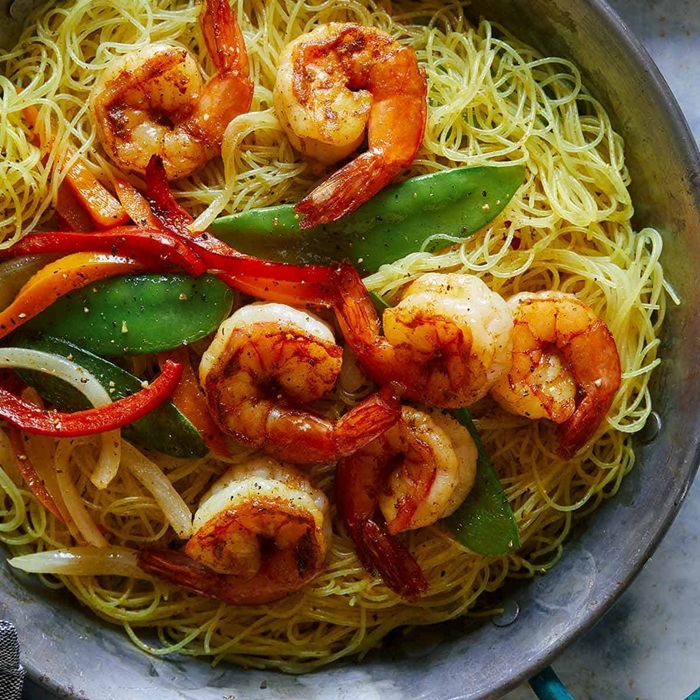
Singapore Noodles with Shrimp is a Seafood recipe from the Chinese tradition, as recorded in TheMealDB. The ingredients and the method below are the recorded ones. This site does not state preparation time, servings, difficulty or equipment, because the source does not record them.
Method
- Step 1. For the sweet onion, look for Vidalia, OSO Sweet, or Walla Walla. The super-sweet varieties are more suited to this stir-fry because at the end of cooking, the onion still has a slight crunch.
- Step 2. Make the sauce:
- Step 3. In a bowl, combine the sesame oil, soy sauce, and rice vinegar.
- Step 4. Cook the rice noodles:
- Step 5. Bring a large saucepan of water to a boil, add the noodles, and use tongs to turn them so they are submerged. Cook for 2 minutes, or until they are tender but still have some bite (they will cook a little more once you add them to the skillet).
- Step 6. Drain, rinse with cold water, and use scissors to snip the noodles several times to break them up into shorter lengths.
- Step 7. Scramble the eggs:
- Step 8. In a small bowl whisk together the eggs. Heat the skillet or Dutch oven over medium heat. Add 1 tablespoon of the peanut or canola oil. Add the eggs and scramble them for 2 minutes, or until they form large, soft curds. Transfer them from the pan to a plate or bowl.
- Step 9. Cook the vegetables:
- Step 10. Add 1 tablespoon of the remaining oil to the pan. When it is hot, add the ginger, garlic, carrots, jalapeño, onion, and salt. Cook, stirring constantly, for 2 minutes or until the vegetables start to soften.
- Step 11. Add the remaining ingredients:
- Step 12. Sprinkle the vegetable mixture with the remaining 1 tablespoon peanut or canola oil. When the oil is hot, add the ham, cabbage, scallions, red pepper, and curry powder to the pan. Cook, stirring constantly, for 1 minute.
- Step 13. Add the shrimp and cook, stirring, for 3 more minutes or until the shrimp are bright pink and cooked through.
- Step 14. Add the noodles in batches:
- Step 15. Add the eggs, the sauce mixture, and half the noodles to the pan. Toss for 1 minute.
- Step 16. Add the remaining noodles and continue tossing for 1 minute more until they are thoroughly combined and the mixture is heated through.
- Step 17. Serve:
- Step 18. Taste for seasoning and add more salt or soy sauce, if you like. Sprinkle with cilantro leaves and serve.
Watch it cooked
If you're a visual learner, there's a free walkthrough of this dish on YouTube.
Original recipe inspiration: source.
More from this category
See all →Other Seafood recipes
Same cuisine
See all →