Home /
Norwegian Potato Lefse
Norwegian Potato Lefse
Vegetarian
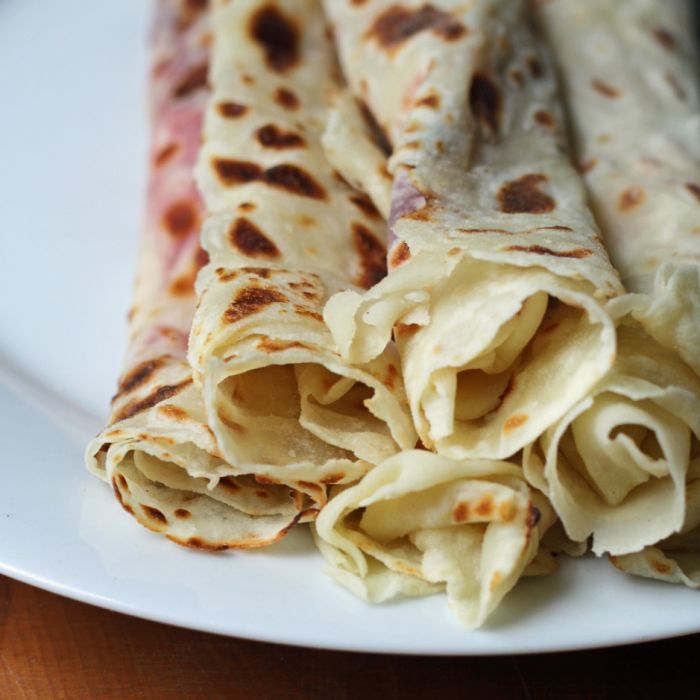
Norwegian Potato Lefse is a Side recipe from the Norway tradition, as recorded in TheMealDB. The ingredients and the method below are the recorded ones. This site does not state preparation time, servings, difficulty or equipment, because the source does not record them.
Method
- Step 1. Boil the potatoes. Peel the potatoes while still warm and run them through a potato ricer twice.
- Step 2. ▢
- Step 3. Let the potatoes cool in an uncovered bowl in the fridge.
- Step 4. ▢
- Step 5. Stir the salt, sugar, melted butter, and cream into the riced potatoes.
- Step 6. ▢
- Step 7. Slowly add the flour and knead by hand until you get a good consistency. Don't add more flour than necessary! Roll the dough into a long sausage and divide into about 7 or 8 pieces if using an 18 inch griddle. If using a smaller griddle or frying pan, divide the dough into 10 – 12 pieces.
- Step 8. ▢
- Step 9. Roll each piece into a ball and then press into a flat circle, using the edges of your hands to form the dough into a nice circle shape without any cracks. This is important, otherwise you won't get round lefser.
- Step 10. ▢
- Step 11. Heat up your griddle on medium/high heat.
- Step 12. ▢
- Step 13. Flour your rolling surface and roll the lefse dough into a large circle slightly smaller than your griddle or frying pan. Begin rolling with a smooth rolling pin, then switch to a corrugated rolling pin as the lefse gets thinner. Don't use too much flour, as then the edges can become hard.
- Step 14. ▢
- Step 15. Roll the lefse onto your lefse stick and then gently unroll it onto your griddle. After a minute or two check the underside of the lefse for brown spots and then use the lefse stick to flip the lefse and cook on the other side.
- Step 16. ▢
- Step 17. Use the lefse stick to remove the lefse from the griddle and place it in a folded damp sheet or tablecloth.
Watch it cooked
If you're a visual learner, there's a free walkthrough of this dish on YouTube.
Original recipe inspiration: source.
More from this category
See all →Other Side recipes
Same cuisine
See all →